NASA tests RS-25 engine for future Artemis Moon missions
NASA ran a development RS-25 engine for 3 minutes and 20 seconds to gather data for future Artemis flights.
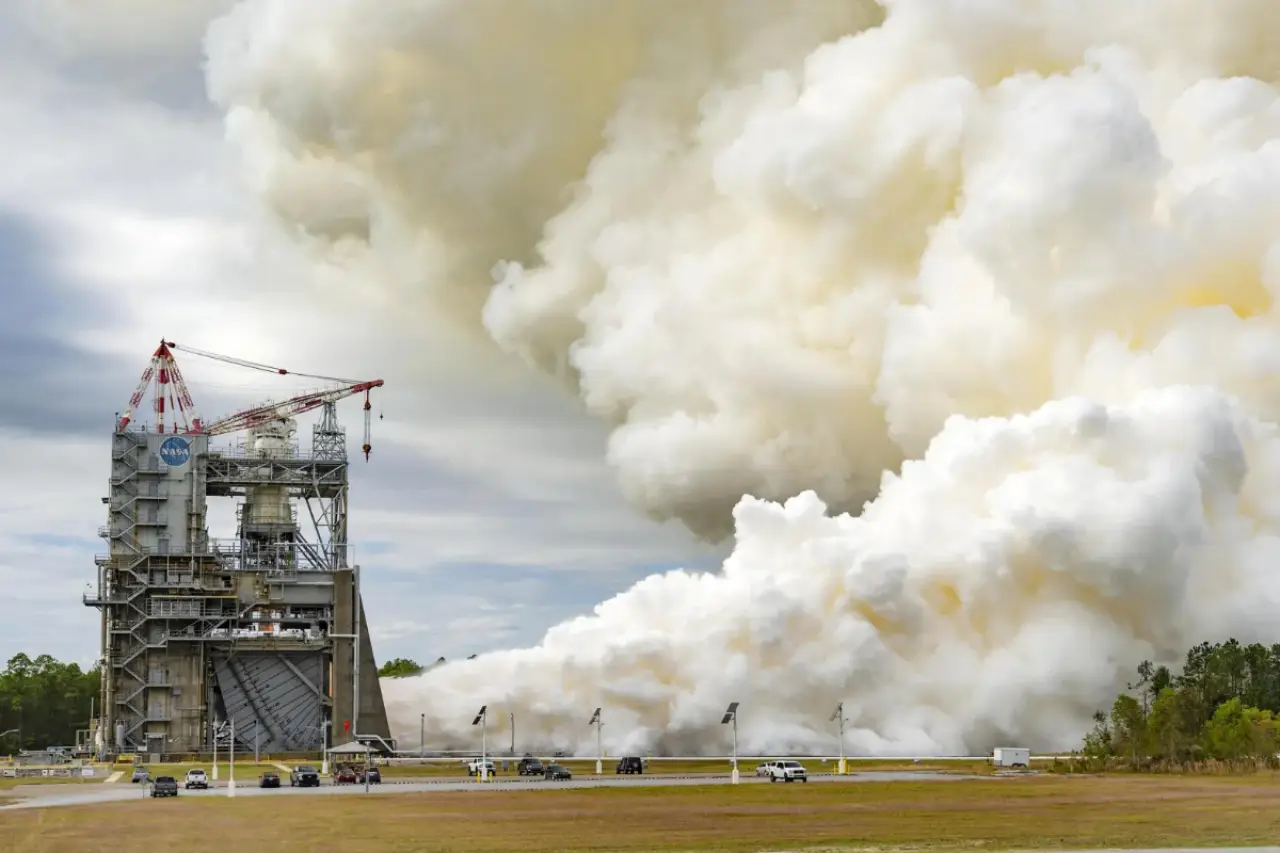
NASA fired a development version of its RS-25 rocket engine on Nov. 18 as part of preparations to return astronauts to the Moon. The engine, designated No. 10001, ran for the full planned 3 minutes and 20 seconds at the Fred Haise Test Stand at NASA’s Stennis Space Center in Mississippi.
The engine tested at Stennis was not built to fly. Instead, engineers at NASA and lead contractor L3Harris Technologies will use the performance data to look for ways to improve the power, efficiency and reliability of RS-25 engines slated for future Artemis missions.
NASA, L3Harris Technologies and Nova Space Solutions are working together on the test program to assess whether the engines are ready for missions beyond Earth. Each Space Launch System rocket uses four RS-25 engines to help lift it off the launch pad and propel it toward space.
NASA is preparing for Artemis IV, which aims to land astronauts on the Moon in 2028. Plans call for the Space Launch System to carry the crew aboard the Orion spacecraft from Kennedy Space Center in Florida. The mission is part of a broader effort to explore the Moon’s south pole, establish a sustained human presence on the lunar surface and develop the experience and technology needed for a future crewed mission to Mars.






Comments