Can a pedestrian zone bring shoppers back to London’s Oxford Street?
Visitor numbers rose in the first week after part of Oxford Street closed to traffic, but some traders say Christmas makes the results hard to judge.
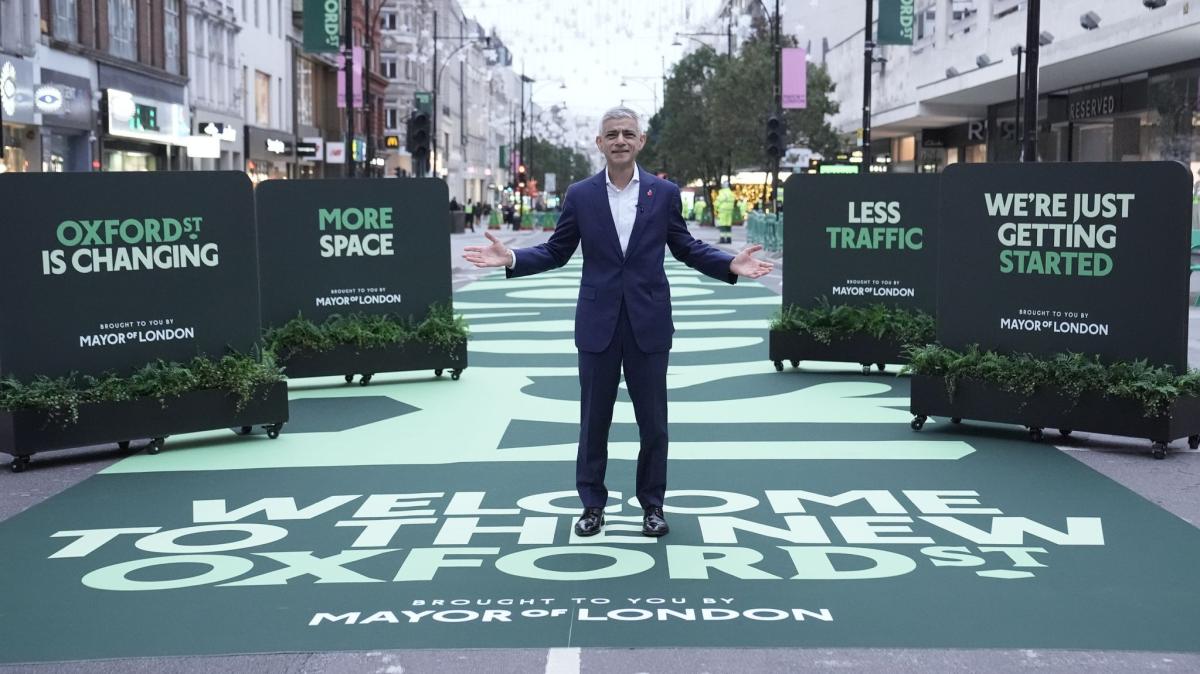
Shoppers on London’s Oxford Street can now stop in the middle of the road to admire the Christmas lights without watching for buses or taxis. Since Oct. 26, a stretch of just under a kilometer between Orchard Street and Great Portland Street has been closed to buses, taxis, cars and bicycles. The question is whether that extra room will keep people coming after the holidays.
Mayor Sadiq Khan first pledged to pedestrianize the shopping street in 2016, but the plan stalled amid opposition from Westminster’s council and concerns about traffic spilling into nearby residential streets. Khan revived the proposal in 2024, and about two-thirds of respondents backed it in a public consultation the following spring. The change comes as the street faces pressures familiar to other shopping districts: online competition, the loss of longtime stores and crowded sidewalks.
The mayor’s office reported that the wider Oxford Street area averaged just under 300,000 visitors a day in the first week after the closure, up 9% from the same period in 2025. Counts rose 16% within the pedestrian zone. Dan Hills, who runs food hall operator Market Halls, reported 29% more guests and a 25% increase in sales.
Souvenir seller Abdul Rahim is waiting to see what happens after Christmas, already his busiest time of year. He says customers are spending less than they used to and mostly buy inexpensive keepsakes such as fridge magnets. More people on the street, in his view, may not change that.
Transport for London reported no major problems on the bus network after routes were diverted, though some stops are now about 200 meters from the pedestrian zone. The agency acknowledged that the changes mean longer walks for older people and those with limited mobility. Michael Bolt of the Marylebone Association cautioned that the initial figures were collected during a quiet autumn holiday period and may not reflect school and commuter traffic.
For now, temporary signs and barriers still dot the street. The first phase is expected to cost about £150 million, with more than 50 trees, over 100 places to sit and two new public spaces planned by spring. Residents’ feedback will help shape the longer-term design.




Comments