On this day in space: Japan’s Hayabusa made the first liftoff from an asteroid
Hayabusa lifted off from asteroid Itokawa on Nov. 19, 2005, and returned a capsule containing asteroid dust to Earth in 2010.
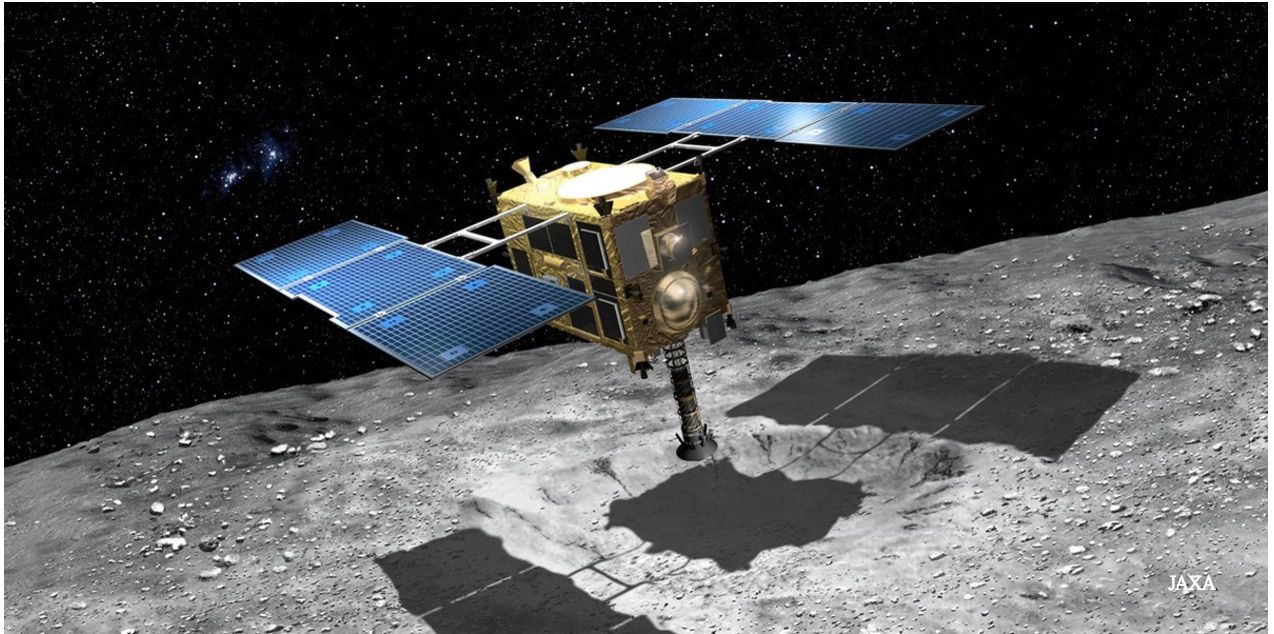
On Nov. 19, 2005, Japan’s Hayabusa spacecraft became the first to lift off from an asteroid. The departure from Itokawa was a milestone, but it wasn’t the mission’s main goal. Hayabusa had been sent to bring back material from the asteroid, and controllers didn’t know whether it had picked up anything.
The Japan Aerospace Exploration Agency (JAXA) launched Hayabusa on May 9, 2003. A solar storm degraded the spacecraft’s solar arrays, leaving less power for its ion engines and delaying its arrival until Sept. 12, 2005. Scientists study asteroids such as Itokawa because they formed early in the solar system’s history.
During the first landing attempt, Hayabusa lost contact with Earth for about three hours after descending to roughly 56 feet above Itokawa. Once communications resumed, JAXA confirmed that the craft had landed. Andrew Cheng, a member of the mission’s science team, said at the time that the craft had bounced several times and rested on the surface for about 39 minutes, but its sampling mechanism apparently hadn’t fired.
Hayabusa touched down again on Nov. 26. With collection still unconfirmed, controllers sent it back to Earth. Its sample capsule landed in Australia in June 2010, and that November JAXA announced that it contained 1,500 grains of Itokawa dust.
The mission’s success paved the way for Hayabusa2, which launched in December 2014 and reached asteroid Ryugu in 2018. It returned samples from Ryugu to Earth in December 2020.



Comments