Tardigrades have survived minus 459 degrees Fahrenheit, near absolute zero
In experiments, tardigrades have survived minus 459 degrees Fahrenheit, a temperature close to absolute zero.
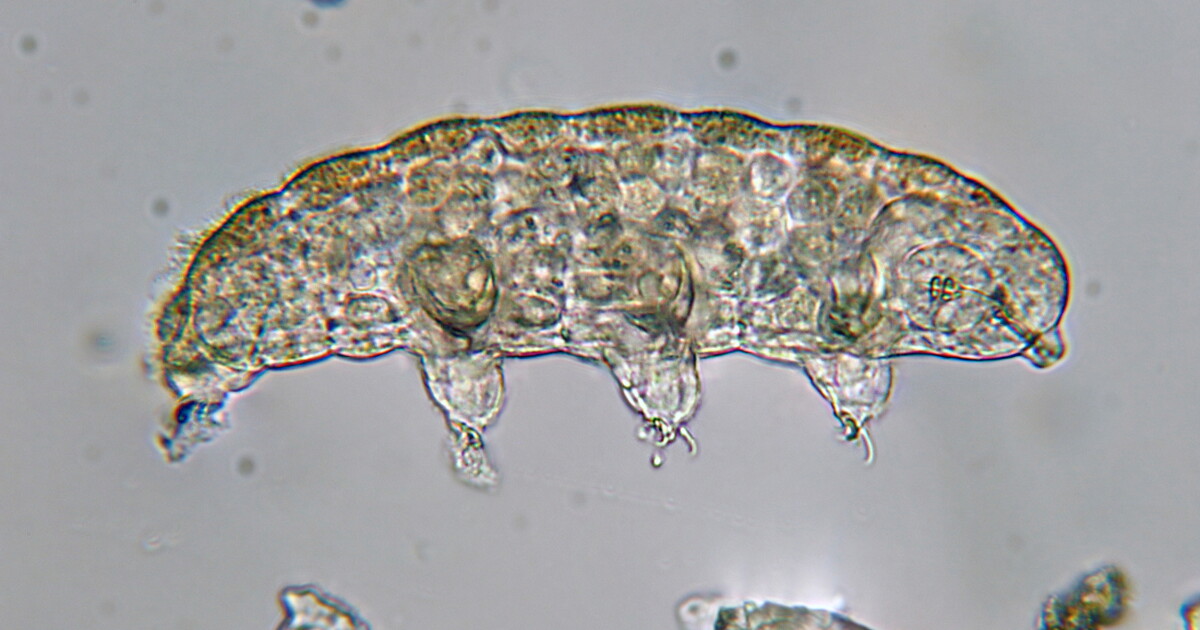
Tardigrades, the microscopic animals nicknamed water bears, have survived exposure to minus 459 degrees Fahrenheit, NHPR’s Outside/In reports. That’s close to absolute zero, the lowest temperature physically possible. The finding came up in response to a question from Nina in Albuquerque, New Mexico, who asked which species had survived the coldest temperature ever observed.
Water bears are typically found in mosses, lichens and leaf litter, according to Marc Mapalo, a tardigrade researcher at the Smithsonian National Museum of Natural History. He likens their gait to that of a bear, but with eight legs. Their toughness extends beyond the cold: Tardigrades have also survived experiments that exposed them to the vacuum and radiation of outer space.
One way tardigrades withstand harsh conditions is through cryptobiosis, a state in which their metabolism nearly stops. It goes further than hibernation: A hibernating animal still has detectable signs of life, such as breathing and a heartbeat, while signs of life in cryptobiosis are nearly undetectable. Mapalo said tardigrades can also form multiple layers of exoskeleton, a process called encystment, that help protect them in extreme conditions.
Tardigrades have been found to remain in cryptobiosis for about 30 years, but other tiny animals have lasted far longer. Researchers have found rotifers and nematodes, also known as roundworms, that spent tens of thousands of years in that state. Those findings show how long the animals can endure, not how low a temperature they can survive.





Comments